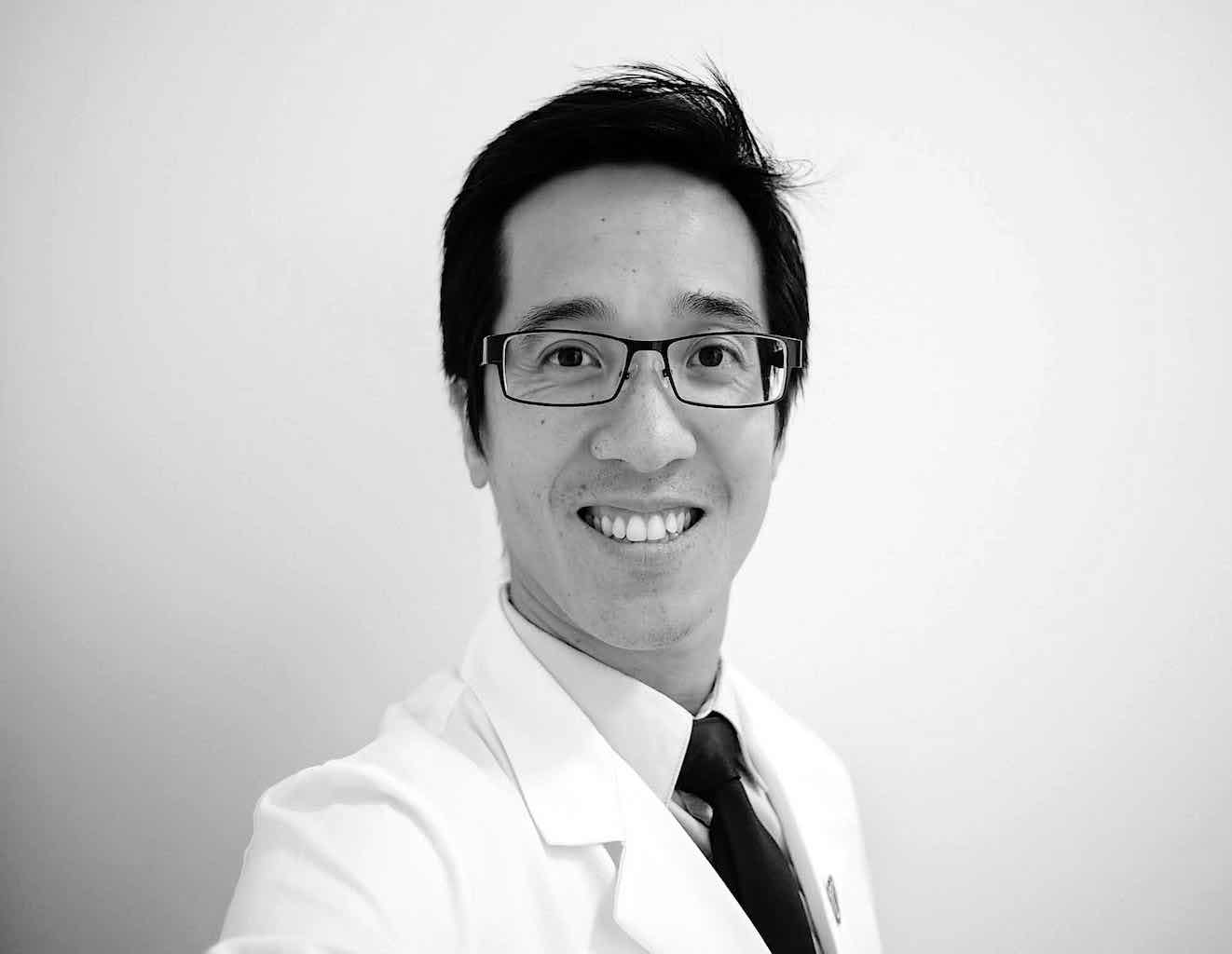
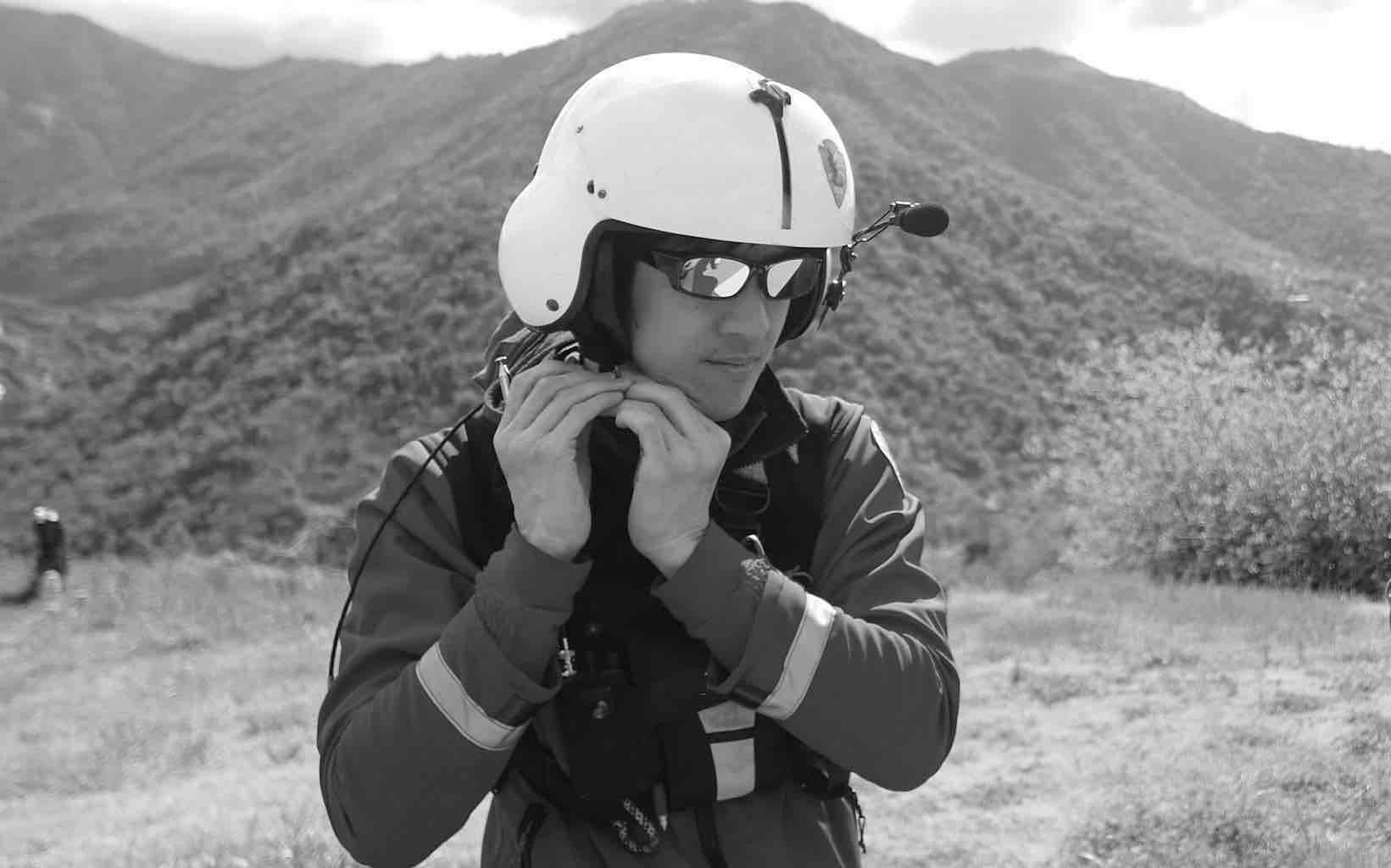
I am a radiology resident and former biostatitician from Stanford. I spend my free time rock climbing, I also volunteer in Mountain Search and Rescue.
About
Hello, I'm Eric. I'm a radiology resident at Stanford and earned my medical degree from Rosalind Franklin University. I previously worked as a Biostatistician at Stanford Medicine.
I hold an undergraduate degree in Industrial Engineering from the University of Toronto, as well as masters degrees in Decision Sciences from the London School of Economics and Health Informatics from the Johns Hopkins School of Medicine.
I like to rock climb and do search and rescue in my free time.
Data Science
COVID-19 Kidney Transplant Web App
What does this COVID-19 pandemic mean for the thousands of people on the kidney transplant waitlist? Should surgeons wait for it to be over? Are these patients at a greater risk going to dialysis every week? I worked with some Hopkins experts to make a simulation. Check out the App.
Lung Cancer Risk Factor R Package
A person's smoking history can inform them about their risk of lung cancer, but what about those of us who have never smoked? can't we get lung cancer too, and how do you figure out our risk? Along w Summer Han, I developed an R package that simulates other lung cancer risk factors using the smoking history generator developed by CISNET. Check it out on my github.
Bias and Efficiency in Matched Study Designs
I developed and tested an algorithm in R that matches cases and controls with varying cluster ratios (instead of a fixed 1:n ratio), for studies where it is difficult to recruit sufficient controls. I presented this work at the Joint Statistical Meeting in Colorado (JSM 2019).
Spontaneous Coronary Artery Dissection
I was the statistical lead on a multi-center study of SCAD. I advised the primary investigators on study design, appropriate statistical methods, and data collection. I have a junior statistician who helps me with this, which is nice.
Predicting HIV in the Demographic Health Surveys
I used conditional inference trees to see if there were any novel factors that may be predictive of HIV status of individuals in sub-Saharan Africa, using sort-of big data from the Demographic Health Surveys.
Liver Simulated Allocation Model
Allocation of donated organs to people with liver disease is challenging in the US. I worked with mathematicians, data from the Scientific Registry for Transplant Recipients, and used simulation models to study hypothetical allocation systems that give people with liver disease a fairer chance at a life-saving liver transplant, regardless of where they live.
Kidney Paired Donation
The National Kidney Registry arranges domino kidney transplants in the US. We studied the associations between transporting kidneys (and the time they are put on ice) and how well the kidneys and patients do. This required plenty of data cleaning, linking, and survival/logistic regression in Stata.
Detecting Pneumonia with Machine Learning
Can a stethoscope and a smartphone be used to listen to your breathing and warn you about potentially abnormal conditions? Clinicloud.com has the answer to this problem. I worked with them to develop neural-net algorithms for heart-rate and pneumonia detection in R.
Patient-Centered Decision Modelling
I wrote Markov models in C (and PhP) to help inform patient-centered decision problems. In one decision problem, kids with kidney disease have to decide whether they should accept a kidney from a willing donor that they know, or if they should wait to get one from the deceased donor waitlist and “save” the other one for later. Check out the online decision-tools I have made here.
I have been a Mountain Search and Rescue Volunteer with the Bay Area Mountain Rescue Unit (BAMRU) in California since 2018. In my first year, I logged 350+ operational hours in over a dozen searches in the Sierras and all over the state. It's not easy! Training in my first-year took 500hrs (my training is still ongoing) and I have to work effectively and safely with my team-mates under circumstances of extreme pressure. I was awarded 2018 Rookie of the year in “recognition of exceptional volunteer service and outstanding BAMRU achievements.”
As a mountain SAR volunteer, I was on-call 24-7 to respond to lost hikers and climbers in the most difficult and remote mountain terrain in California. Ocassionally, we get flown in by helicopter and are expected to be self-sufficient for 72hrs; but usually we hike in and out and are supported very generously by the local communities whom we are serving.
Church E et al, Pregnancy after direct cerebral bypass for Moyamoya disease. J Neuro Surg; Nov 15, 2019.
Pargaonkar V et al, Accuracy of non-invasive stress testing in women and men with angina in the absence of obstructive coronary artery disease. Intl J of Cardiology 2019; 282:7-15.
Han S et al, Disparities of national lung cancer screening guidelines in the US population. J Natl Cancer Inst 2020; 112(11).
Massie A et al, Identifying scenarios of benefit or harm from kidney transplantation during the COVID-19 Pandemic: A stochastic simulation and machine learning study. AJT 2020,00:1-11.
Pargaonkar V et al, Dose-response relationship between intracoronary acetylcholine and minimal lumen diameter in coronary endothelial function testing of women and men with angina and no obstructive coronary artery disease. Circ Cardiovasc Inerv. April 2020.
Art
Medical Illustrations
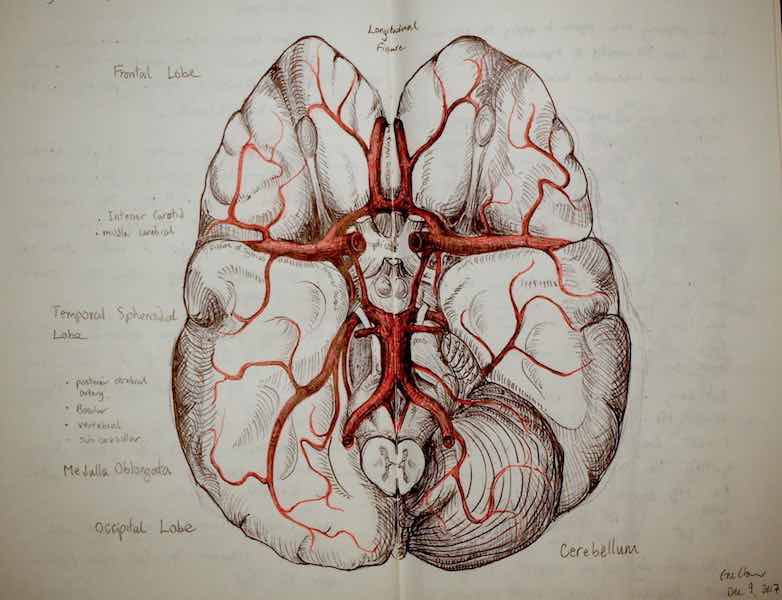
I could always draw very well. I had an elementary school art teacher who would always say that I had “the eye” in a very freaky ominous way. I'm not sure where this eye is, but I think I just have very excellent fine motor skills. I started drawing like this when I was about 11 years old. At the time, my favorite subject were dinosaurs.
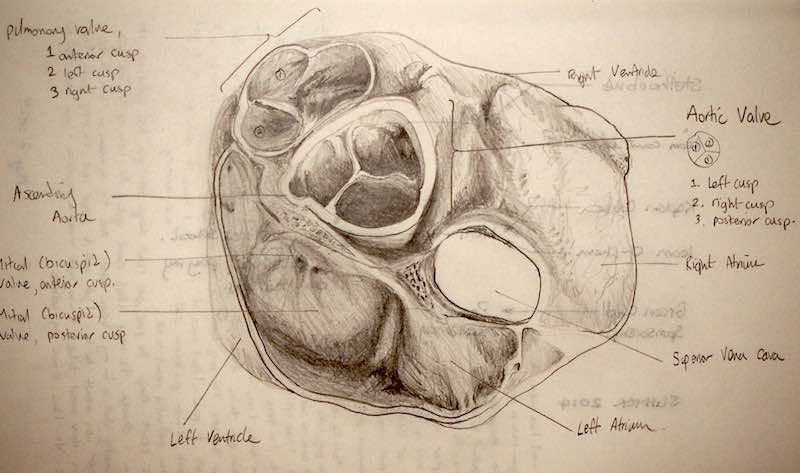
Here's another example. For those familiar with Gray's Anatomy, you may notice that my inspiration for these sketches come from there. Except this cross section of a heart. I forget where I saw this from.
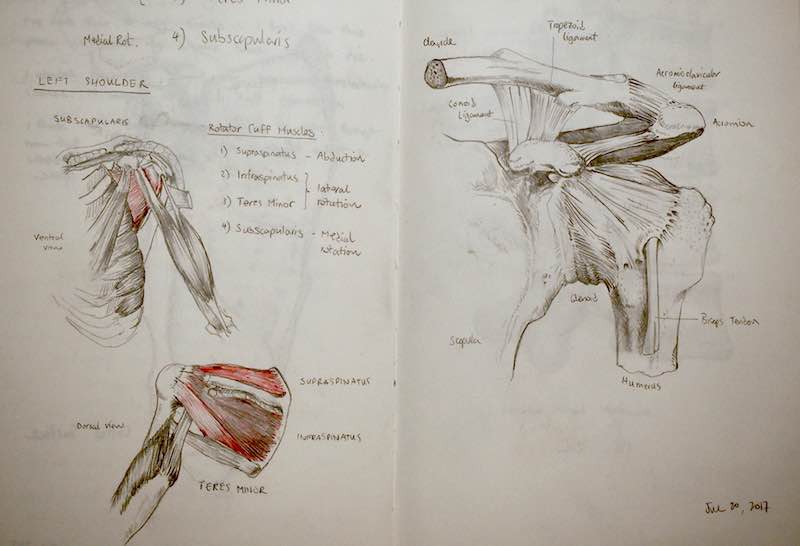
Here is a study I did of the anatomy of the shoulder. I did it because I had a shoulder injury from climbing, and I learned that the shoulder is hella complicated.
You can get in touch with me about research, biostatistics, data-science, medicine, search and rescue, climbing, adventuring, (or anything really) by email: echow8@stanford.edu